Data platform at Safety Region IJsselland
Cities | Public Services x Data
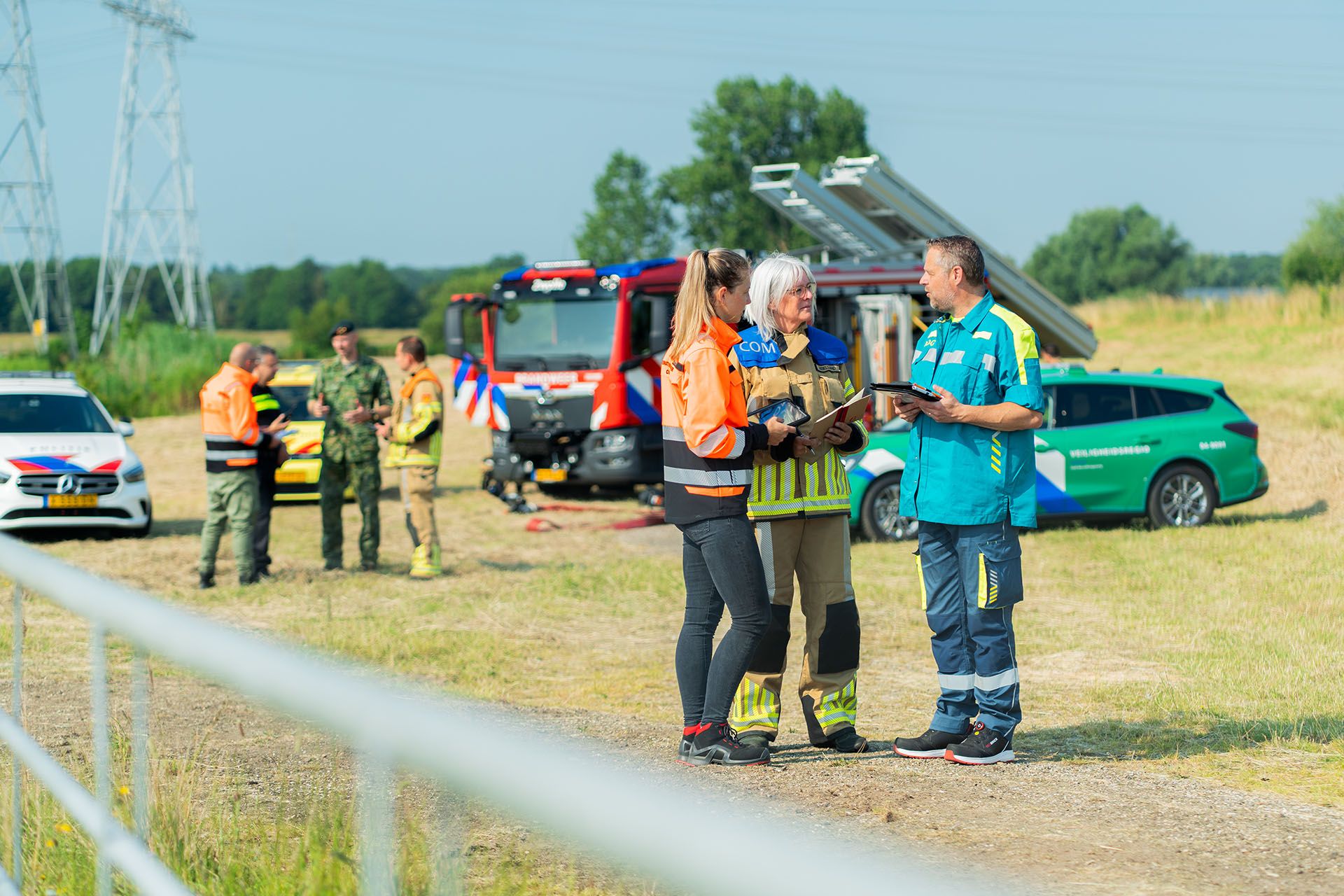
The Safety Region IJsselland is responsible for organizing and coordinating emergency response services during incidents and crises within the region. While the fire department is an important part of the organization, the role of the safety region extends far beyond firefighting alone. The organization works closely with multiple emergency response partners that are coordinated through the regional emergency dispatch center. To improve their information management, the Safety Region wanted better insight into incidents and emergency reports they are involved in. These insights help them better understand where resources are needed, how teams can be planned more effectively, and where preventive measures may be possible. The Safety Region IJsselland came into contact with Heroes through the collaboration with the Municipality of Zwolle, for which a similar project had previously been carried out.
The challenge
The safety region was working with a largely traditional, on-premise data environment. Although the data was already being used within Power BI, the underlying infrastructure was still relatively static and lacked flexibility.
At the same time, the safety region shares part of its IT environment with the GGD IJsselland through a shared service setup. Both organizations use the same Azure environment and therefore share certain technical components of the platform. This added an extra layer of complexity when redesigning the data platform.
The organization’s goal was therefore to modernize its data environment, improve its structure, and create a future-proof foundation.
The solution
Together with the safety region IJsselland, Heroes first organized a series of workshops to map out the current situation, requirements, and future ambitions. In total, three workshops were held, focusing on topics such as cloud architecture, security, and data.
Various stakeholders from the safety region participated in these sessions, including the security officer, cloud administrator, IT manager, information analyst, and the project lead of the data warehouse initiative. Based on these workshops, the future setup of the platform was designed collaboratively.
Heroes then designed and implemented the renewed data platform using Microsoft Fabric within the existing Azure environment. Special consideration was given to the shared IT environment with GGD IJsselland. Within the same Azure tenant, a clear separation was created so both organizations could operate independently alongside one another. At the same time, the setup was designed in a way that allows the GGD to connect to the same structure more easily in the future if desired.
The project started around September/October and was completed in early 2026 with the successful delivery of the platform.
The three key takeaways for every company
Understanding the current situation first - Starting the project with workshops made it possible to fully understand the existing environment, requirements, and constraints before making technical decisions.
Designing around shared infrastructure - Because the safety region shares an Azure environment with the GGD, it was important to create a clear separation within the platform while still leaving room for future collaboration.
Building a scalable foundation - The platform was designed not only to support the current situation, but also to provide room for future expansion and development.
With the renewed platform, the safety region now has a better-structured data environment and improved accessibility to information. As a result, insights can be used more reliably for capacity planning and incident analysis. Following the delivery of the platform, the safety region continues to work independently with the new environment. In practice, new questions and expansion opportunities still arise regularly, where Heroes can provide additional support when needed. This demonstrates that the collaboration created a strong foundation for future developments.

Hi, I'm Koen. Fill out the contact form and Heroes will find a solution for your case.